The Commission has now been in office for two years. Its ambition to cut red tape and strengthen European competitiveness is highly welcome. Now the reality must follow the rhetoric. Europe wants to become stronger, safer and more resilient. Delivering on these ambitions requires a competitive and predictable environment so industries can invest, innovate and produce in Europe. For the Finnish forest industries, the direction is clear: competitiveness and the green transition must go hand in hand. By replacing fossil-based materials with renewable European alternatives, the forest-based bioeconomy strengthens Europe’s industrial base, reduces strategic dependencies and supports economic resilience.
Resilient forests for a resilient Europe
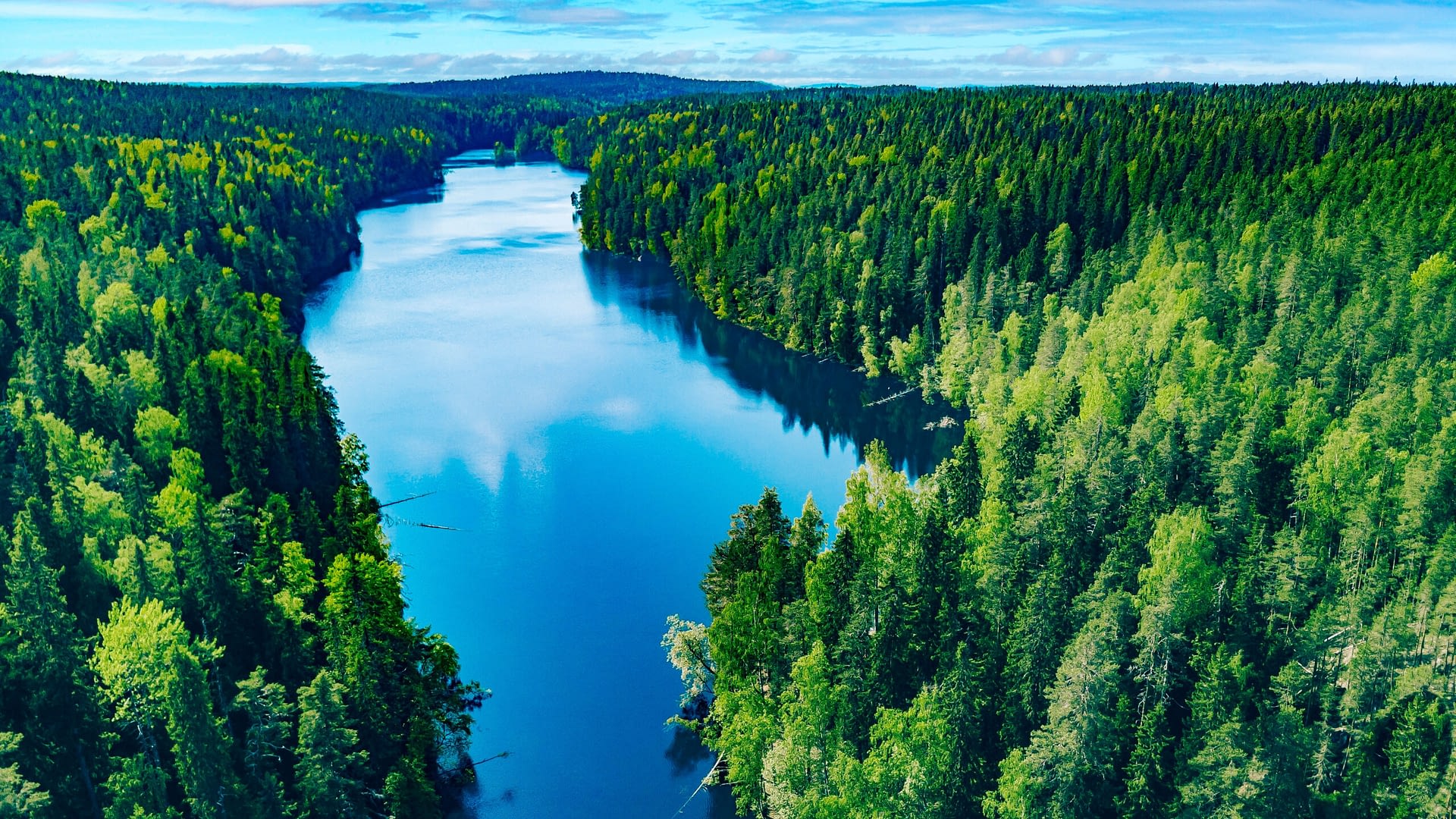
Europe is increasingly suffering from devastating wildfires. Active sustainable forest management is essential to reducing wildfire risks, strengthening forest resilience and limiting damage when fires occur. Finland has decades of experience in sustainable forest management. Resilient forests require investment, expertise and active management.
At the same time, Europe needs a more credible approach to LULUCF. We welcome Commissioner Hoekstra’s recognition during his recent visit to Finland that the country’s circumstances must be fairly reflected when assessing its LULUCF obligations, including the impact of the end of Russian wood imports following Russia’s invasion of Ukraine.
The Finnish forest industries strongly support Europe’s climate objectives. But ambitious climate policy must be built on a robust and realistic framework. Forest sinks are inherently unpredictable and increasingly affected by climate change, natural disturbances and changing measurement methodologies. The current LULUCF framework needs to better recognise these uncertainties and circumstances beyond Member States’ control.
Europe should prioritise reducing fossil emissions, and replacing fossil-intensive materials with renewable alternatives, while strengthening forest growth and resilience through active and sustainable forest management.
Turn the green transition into European industrial growth
Europe must progressively reduce its dependence on fossil-based materials and create stronger markets for renewable and recyclable alternatives. The forthcoming Circular Economy Act should recognise renewable content alongside recycled content as a core principle. When a renewable solution can replace a fossil-based one, European policy should help make that transition happen.
The Commission’s new Public Procurement Act is a major opportunity to do so. The new framework should enable ambitious requirements for renewable and bio-based content in public procurement, helping to create lead markets for sustainable European products and stimulate investment in new production capacity.
Housing and construction can become important lead markets for renewable materials. As Europe increases the supply of sustainable and affordable housing, including through the new Affordable Housing Act, EU policy should promote renewable and sustainably sourced construction materials, including wood-based solutions. This would reduce dependence on fossil-intensive materials while supporting European manufacturing and new investment.
Strong European demand must be matched by an attractive investment environment. Europe needs competitive energy and operating costs, simpler and stable regulation, and strong incentives for innovation and decarbonisation. Finnish forest industry companies already invest billions in renewable materials, circular solutions and lower-emission production. The challenge is to ensure that the next generation of industrial investment happens in Europe.
European competitiveness requires more than innovation: it requires manufacturing, investment and industrial scale-up in Europe. Europe must remain a place where renewable materials are developed, manufactured and scaled up.
The next EU budget should help turn European innovation into European factories. Funding should be technology-neutral and excellence-based, addressing market failures and helping promising technologies move from research to first industrial deployment. Greater investment in biotechnology and the bioeconomy is needed to ensure that new renewable materials and technologies are developed, scaled up and manufactured in Europe.
Reward European frontrunners and ensure fair competition
Companies investing in Europe’s green transition need a framework that allows them to compete. The reform of the EU Emissions Trading System is a crucial opportunity to get this right. Effective carbon-leakage protection, including benchmark-based free allocation, remains necessary for internationally competing sectors as long as producers outside Europe do not face equivalent carbon costs. At the same time, the 95% biomass rule must be fixed. Installations relying on biomass for more than 95% of their energy are excluded from the ETS and therefore cannot receive free allowances. This can put some of Europe’s lowest-emission industrial installations at a disadvantage. Europe’s climate framework must reward early decarbonisation, not penalise it. It should also create incentives for the next generation of climate solutions, including permanent biogenic carbon removals.
Fair competition also extends beyond Europe’s borders. The Finnish forest industry supports open, rules-based international trade and does not seek protection from genuine market competition. But open trade cannot mean accepting competition distorted by large-scale state intervention and subsidies. The EU needs targeted and effective trade instruments to address unfair competition and maintain a level playing field.
Europe’s climate, competitiveness and security ambitions must reinforce each other. A strong forest-based bioeconomy can reduce dependence on fossil-based materials, strengthen strategic autonomy and sustain value-added manufacturing across Europe. The test for EU policy is straightforward: does it make companies more willing to innovate, decarbonise, manufacture and invest in Europe? For the Finnish forest industries, this means predictable regulation, fair climate and trade policy, stronger markets for renewable materials and an investment environment that rewards companies leading the transition.
Europe has set the ambition. Now it must create the conditions to deliver it.